Mobile Solutions
SMS Scams & Fraudulent Calls in Hong Kong: What Businesses Need to Know
One fake "delivery failed" text is often all it takes.
A single fraudulent text claiming a failed delivery is often enough to begin a scam. When criminals impersonate a courier, a bank or a telecommunications provider, the impersonated business also bears the cost: reputational damage, increased service enquiries, and reduced customer confidence in its genuine communications. This blog explains how these schemes operate and sets out key measures for Hong Kong enterprises.
1. SMS Scams and Fraud Calls in Hong Kong: The Latest Figures
-
Hong Kong recorded 43,212 deception cases in 2025, representing 48.5% of all reported crime, with total losses of approximately HK$8.1 billion.
-
Telephone deception accounted for 8,621 cases, of which 4,440 involved the bogus customer service tactic. These cases typically begin with a fraudulent SMS instructing the recipient to call back.
-
Courier impersonation remains among the most common formats. The ADCC has issued specific warnings regarding fraudulent SF Express SMS messages, in which criminals claim a parcel has been lost and offer compensation in order to obtain banking details.
2. How SMS Scams Become Fraudulent Calls: The 5 Common Stages
The following sequence is common to most cases.
1). Impersonation of a trusted organisation
Couriers, retail banks, telecommunications providers, e-commerce platforms and government departments are the most frequently affected. Sender names are often only one character removed from the genuine version.
2). Creation of urgency
Common pretexts include failed delivery, customs clearance issues, unusual account activity, expiring reward points, and unrecognised subscription charges.
3). Redirection to a link or hotline
Links lead to convincing replica websites. Hotline numbers connect to an operator following a prepared script. This is the stage at which an SMS scam becomes a fraudulent call.
4). Collection of sensitive information
This typically includes HKID numbers, card details, internet banking credentials, one-time passwords, or instructions to install an unverified application.
5). Rapid transfer of funds
Proceeds are moved through third-party accounts or virtual assets, which makes recovery difficult.
3. How Hong Kong Enterprises Can Reduce Exposure to SMS Scams?
➤ Register an official SMS sender name
-
Participate in the SMS Sender Registration Scheme administered by the Office of the Communications Authority, and issue messages using a registered sender name prefixed with a hash symbol.
-
Customers are able to verify the sender against the public register, which reduces the scope for impersonation.
➤ Standardise outbound communication channels
-
Define clearly which notifications are issued by SMS, which remain within your mobile application, and which are sent by email only, and apply this consistently.
-
Avoid shortened URLs in official messages.
-
Do not request passwords or one-time passwords by SMS under any circumstances.
➤ Monitor for brand impersonation
-
Conduct regular checks for similar domain names, fraudulent social media accounts, and scam messages circulating under your brand name.
-
Where impersonation is identified, publish a notice on your website, social media channels and hotline greeting, and report the matter to the Police and the relevant platform without delay.
➤ Strengthen internal and customer awareness
-
Provide frontline and contact centre teams with a defined escalation procedure for suspicious messages reported by customers.
-
Maintain a dedicated anti-fraud page setting out your registered sender names, official hotline numbers, and the tactics currently in circulation.
➤ Ensure genuine calls are readily identifiable
-
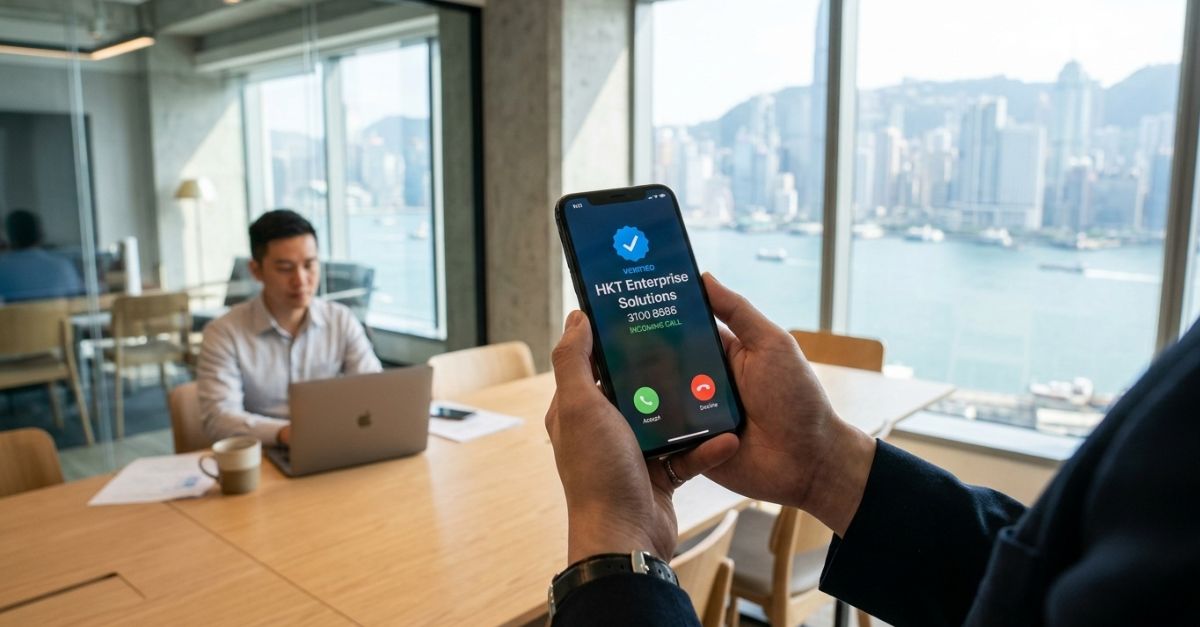
If customers are unable to distinguish a genuine call from a fraudulent one, appointment reminders, risk alerts and service notifications will not reach them.
-
Displaying a verified organisation name addresses this before the call is answered.
4. From Text to Call: Building a Verifiable Business Identity
Defending against SMS scams cannot rest on customer vigilance alone. What a business can control is whether every message and every call it sends can be independently verified. HKT offers two complementary solutions.
HKT #SMS Delivery Service:
The Office of the Communications Authority has opened the #SMS Sender Registration Scheme to all industries. Only registered senders may issue messages using a sender name prefixed with a hash symbol.
-
Support in completing registration and sending messages under an authenticated # sender name
-
Customers can verify your identity against the public register, narrowing the scope for impersonation
-
Built-in content approval workflow and delivery testing to keep messages accurate
-
Local and overseas delivery, with round-the-clock service support
HKT Enterprise Caller Name Display Solutions:
-
Verified organisation name on screen - Your company name and a verification indicator are displayed when you call csl. and 1O1O mobile customers.
-
No saved contact required - Recipients can identify the caller immediately, including on first contact.
-
Improved answer and response rates - Appointment reminders, account verification and claims follow-up reach their intended recipients.
-
Full compliance in Hong Kong - Corporate identity and use case verification are completed prior to activation, and live testing is available before deployment.
-
Adopted across sectors - Healthcare providers, banking, finance and insurance, government departments and non-profit organisations, and property and campus management.